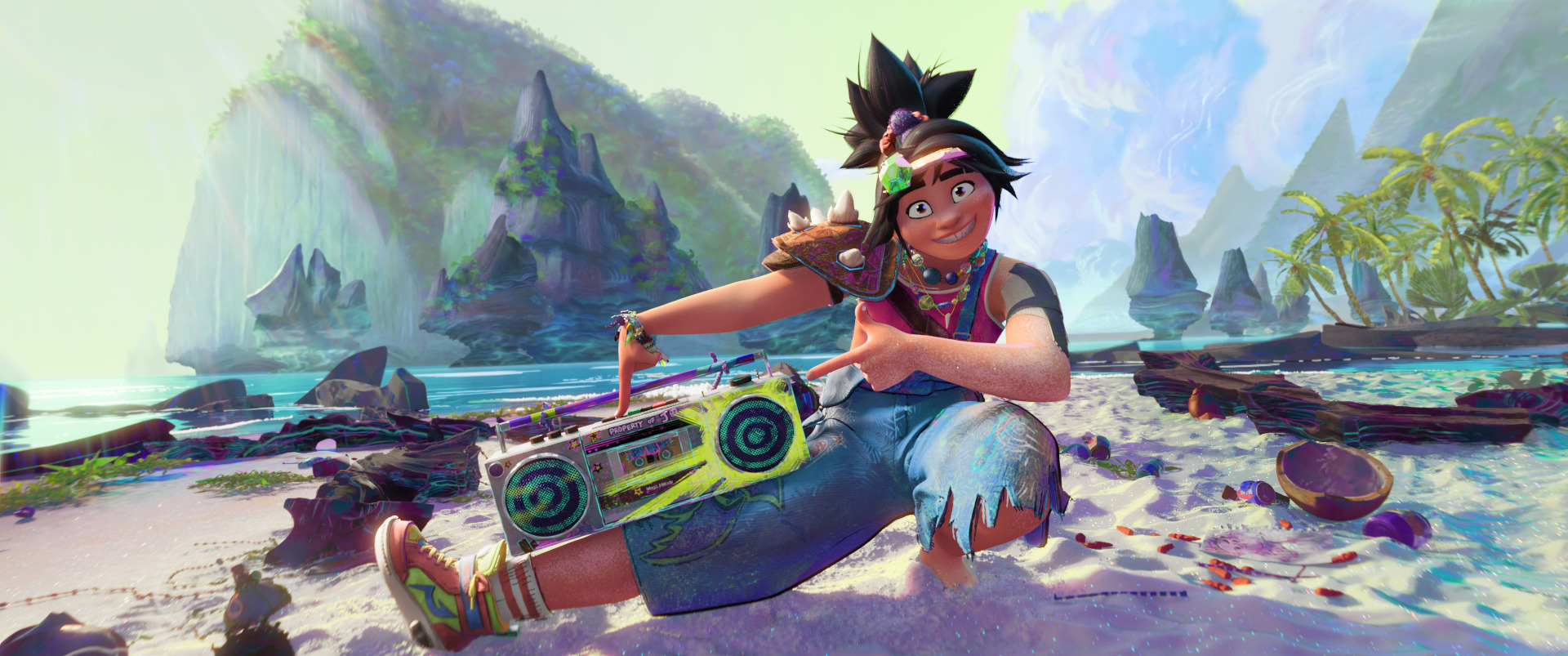
When moviegoers watch an animated character leap across a bioluminescent beach or run through a jungle rooted in ancient folklore, they focus on the emotion, the acting, and the colors. The Lenovo DreamWorks Forgotten Island technology partnership shows how much compute power is actually humming beneath the floorboards to make those moments possible.
Every single frame of modern 3D feature animation represents millions of calculated lighting paths, complex cloth and hair simulations, and petabytes of digital assets. One production bottleneck can cost hundreds of artist hours.
For DreamWorks Animation’s latest feature film, building the fantastical Philippine-inspired realm of Nakali required an enterprise computing engine capable of keeping pace with world-class storytellers. The Lenovo DreamWorks Forgotten Island hardware pipeline provided that critical compute foundation.
Here is a closer look at the technology infrastructure behind the film, how Lenovo hardware powered the production, and what this collaboration means for digital creators and enterprise workflows.
Before You Read
- Article Type: Tech News & Industry Analysis
- Evidence Level: Level 4 — Research & Official Documentation (Based on official corporate announcements, production technical briefs, and studio disclosures from Lenovo Philippines and DreamWorks Animation)
- Testing Scope: Enterprise workstation architecture, data center compute solutions, and digital production pipeline evaluation. No firsthand hardware benchmark tests were conducted for this release.
- Core Takeaway: Enterprise animation demands seamless integration between local workstation response times and centralized render cluster throughput.
Quick Info
- Technology Partner: Lenovo (Workstations, High-Performance Computing, Data Center Infrastructure)
- Production Studio: DreamWorks Animation
- Featured Project: Forgotten Island (Directed by Joel Crawford and Januel Mercado)
- Lead Voice Cast: H.E.R. (Jo), Liza Soberano (Raissa)
- Key Hardware Roles: Real-time artist rendering, large-scale compute simulations, high-density data management
- AA Tech Hunter Verdict: An impressive demonstration of how enterprise workstation reliability directly supports complex, large-scale creative storytelling.
The Story Behind Lenovo DreamWorks Forgotten Island
The production behind the Lenovo DreamWorks Forgotten Island collaboration marks an important cultural milestone. Written and directed by Joel Crawford and Filipino-American filmmaker Januel Mercado (the team behind Puss in Boots: The Last Wish), the film follows lifelong friends Jo (voiced by H.E.R.) and Raissa (voiced by Liza Soberano) as they are transported to Nakali—a mythical island populated by magical creatures rooted in stories from Filipino families.
The production brought together an acclaimed ensemble voice cast including Dave Franco, Jenny Slate, Manny Jacinto, Dolly de Leon, Jo Koy, Ronny Chieng, and Lea Salonga, produced by Academy Award nominee Mark Swift.
However, translating that rich cultural world into intricate 3D environments created massive technical demands. In 2025, DreamWorks expanded its relationship with Lenovo by officially selecting the company as its preferred workstation, compute services, and enterprise solutions provider. The Lenovo DreamWorks Forgotten Island workflow ensured animators had the processing power and reliability needed to focus entirely on storytelling.
When hundreds of animators, lighters, and visual effects artists operate simultaneously, real-time interactivity at the desk is non-negotiable.
Translating Complex Animation into Real-World Hardware
Feature animation does not move in a straight line. It is an iterative, demanding process where an artist might modify a character’s hair, adjust atmospheric smoke, or reposition a light source dozens of times an hour. Within the Lenovo DreamWorks Forgotten Island production ecosystem, technical teams relied on high-density architecture to avoid render latency.
Lenovo supported DreamWorks across three primary production layers:
1. High-Performance Artist Workstations
At the desk level, animators need immediate feedback. Waiting several minutes just to preview an asset adjustment slows creative momentum. Lenovo workstations provide the dedicated processing power and GPU rendering pipelines required to manipulate dense 3D models with minimal latency.
2. High-Performance Computing (HPC) Clusters
Once scenes are finalized, they are sent to the render farm. Calculating volumetric lighting, water movement around Nakali’s shores, and tropical foliage requires massive compute farms running around the clock. Lenovo’s high-performance infrastructure supplies the scale needed to process these calculations without server throttling.
3. Enterprise Data Center Storage and Services
Feature films accumulate hundreds of terabytes of working assets. Asset management systems must ensure that texture artists, modelers, and compositors can read and write high-resolution files simultaneously across secure internal networks without file corruption or downtime.
The Tech Reality Check: What This Means for Everyday Creators
While independent creators and boutique studios do not operate multi-million-dollar render farms, the engineering lessons from major studio pipelines apply across all creative tiers.
The Problem This Solves
Large creative files routinely overwhelm consumer PCs. High-resolution rendering, multi-layer video timelines, and 3D modeling trigger memory bottlenecks, slow thermal throttling, and system crashes. The enterprise partnership seen in Lenovo DreamWorks Forgotten Island is designed to eliminate workflow interruptions caused by insufficient hardware.
The Hidden Compromise: Enterprise Overhead
Enterprise workstations and dedicated compute clusters are engineered for reliability and scalability, but they come at high initial hardware and maintenance costs. For solo creators or small video production setups, consumer desktop processors and gaming GPUs often provide sufficient rendering speed for short-form video projects at a fraction of the cost.
The Hidden Benefit: Proven Thermal & Component Longevity
Hardware designed for animation studios undergoes rigorous validation for thermal stability under 100% continuous processor loads. The architecture developed for systems like those in the Lenovo DreamWorks Forgotten Island deployment regularly trickles down into mobile creator laptops and consumer-grade desktop systems.
Buying Decision Framework: Should You Invest in Workstation-Grade Hardware?
If you are evaluating your own computing hardware for animation, 3D modeling, or heavy video production inspired by the Lenovo DreamWorks Forgotten Island setup, consider these parameters:
Buy If:
- You manage intensive 3D rendering, CAD, or multi-stream 4K/8K RAW footage daily.
- System crashes or render downtime directly cost you billable client hours.
- You require error-correcting memory (ECC RAM), certified ISV software drivers, and dedicated enterprise hardware support.
Skip If:
- Your primary workflow centers on 1080p or standard 4K video editing, web streaming, graphic design, or office productivity.
- A consumer-grade laptop or standard desktop PC easily handles your daily project timelines without thermal throttling.
Wait If:
- You are just entering 3D animation or video editing. Maximize your existing hardware first, identify where your system genuinely slows down, and upgrade only when hardware limitations prevent project completion.
Frequently Asked Questions
What role did Lenovo play in Lenovo DreamWorks Forgotten Island?
Lenovo served as DreamWorks Animation’s preferred provider of compute services, high-performance workstations, and data center infrastructure, supplying the processing power required to render complex visual effects, animation sequences, and environments.
Who directed the Lenovo DreamWorks Forgotten Island project?
The film was directed by Joel Crawford and Filipino-American director Januel Mercado, the filmmaking duo behind Puss in Boots: The Last Wish.
Who stars in the voice cast of Forgotten Island?
The animated film stars Grammy and Academy Award winner H.E.R. as Jo and actress Liza Soberano as Raissa, alongside Dave Franco, Manny Jacinto, Jenny Slate, Dolly de Leon, Jo Koy, Ronny Chieng, and Lea Salonga.
Do individual creators need the hardware used in Lenovo DreamWorks Forgotten Island?
No. Independent creators and small teams can achieve great results with mid-range or high-end consumer hardware. Enterprise workstations are specifically optimized for 24/7 reliability, certified application stability, and massive dataset handling.
Final Verdict
The technical collaboration behind Lenovo DreamWorks Forgotten Island highlights a fundamental rule in modern technology: great creative work relies on a stable, invisible foundation.
By delivering the computing performance, data center infrastructure, and workstation reliability needed to handle demanding production assets, Lenovo allowed the artists behind Forgotten Island to stay focused on what truly matters—bringing an authentic, culturally rich Filipino adventure to the global screen. The Lenovo DreamWorks Forgotten Island milestone demonstrates how technology enables world-class creative storytelling.
Related Buying Guides & Reviews
Before making your next tech purchase, explore our other practical guides on AA Tech Hunter:
- DJI Buying Guide Philippines (2026): 5 Cameras & Drones Every Creator Should Know
- HONOR 600 Review: Everything You Need to Know Before You Buy
Follow AA Tech Hunter
Get more practical buying guides, store walk-throughs, and real-world tech advice:
- Website: AA Tech Hunter
- YouTube: AA Tech Hunter
- Facebook: AA Tech Hunter
- TikTok: @AATechHunter
Official Sources
For complete technical specifications, studio updates, and official hardware partnership details, visit:
- Lenovo Official Newsroom: https://news.lenovo.com
- Lenovo Philippines Portal: https://www.lenovo.com/ph/en/
- DreamWorks Animation Official Site: https://www.dreamworks.com
The AA Tech Hunter Promise
Investing in creator hardware or productivity tech should make your creative workflow smoother—not cause financial confusion, unexpected maintenance headaches, or buyer’s remorse. We will continue tracking enterprise technology developments, verified hardware compatibility, and real-world creator tools to help you spend your hard-earned money wisely.
About the Author
I’m Aldrich Alexandre Galias, Founder & Editor of AA Tech Hunter, a technology media platform dedicated to helping people make smarter technology buying decisions through honest reviews, hands-on testing, practical buying guides, and product comparisons.
Editorial Disclosure
AA Tech Hunter does not accept payment to produce favorable reviews or promotional coverage. This report is based on official manufacturer documentation, verified technical releases, and authorized studio launch materials. If external links are provided, they may contain affiliate links that help support our publication at no additional cost to you.
Leave a Reply